
Exit planning: Getting your auto repair shop ready for sale
Husband-and-wife shop owners sold their $2.2 million business in 2021, and then built an exit-planning and value acceleration practice after finding too few resources that leave many shop owners unprepared
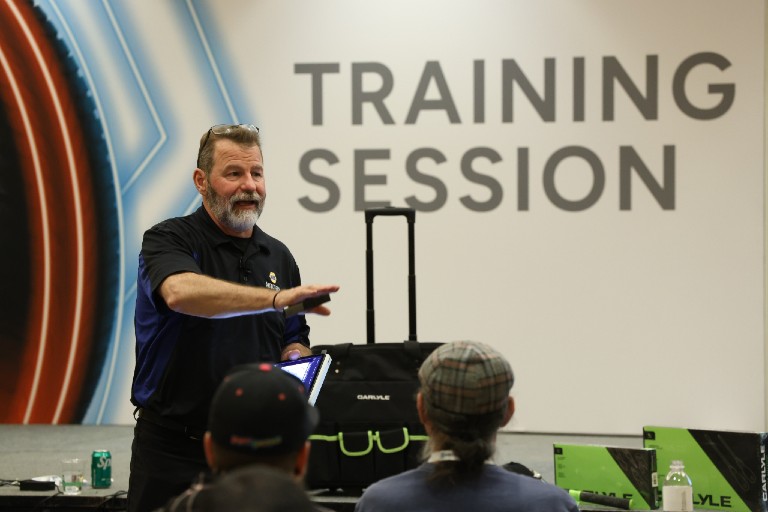
LAS VEGAS – September 29, 2026 – Becca and Tony Zanders owned and operated an auto repair business for 22 years before they decided to sell it. The Zanders built the shop into a successful business: eight service bays and 12 employees earned the business $2.2 million in annual sales.
They sold it to an employee – a manager – in 2021.
The pair had been actively participating in mastermind and coaching groups for nearly 20 years before they began their consulting business in 2021. So, about a year later, they put their business hats back on and added a new service to their consulting firm, D6 Elements: exit planning and value acceleration consulting.
The duo will be presenting a session on this topic at AAPEX 2026: Built to sell: strategic exit planning for automotive business owners. The AAPEX team caught up with them recently to preview their session and ask them a few questions for a Q&A.
Q1: What did selling your auto repair shop teach you about exit planning?
Becca: “The process of going through a sale was like walking through the fog. We noticed that there were just a lot of missing pieces:
- Do we have the right people at the table?
- Is the sale structured correctly?
- Do we know where every dollar’s going to go after the sale?
We ended up having to find a different attorney and needed different accounting advice for tax strategy. There’s a lot of great automotive coaching out there, but there isn’t much that helps owners know if they are really ready to sell.”
Tony: “A lot of the work we had been doing with coaching and training had made us ready from a business perspective. For example, we had two different professionals tell us we were asking for way too much for our business. Yet when we finished the appraisal with the SBA, their number was within a few hundred dollars of our own amount.
So, it was really eye-opening to see the limits of understanding that even the pros have about valuation. Two different professionals had said our number was wrong, but we were actually right in the end.
There was also a lot that we didn’t learn until after the sale of the business. Becca, for example, started training to become a Certified Exit Planning Advisor (CEPA) and that’s when we started seeing the missing pieces.”
Q2: What caused you to decide to get into the exit planning consulting business?
Becca: “We decided to take a year-long sabbatical after we sold our business. We traveled, took a break, and just got some rest, which I highly advise anybody who’s completed a sale to do.
Then I started reading and learned that 75% of owners regret selling their business within one year. The reason rarely has anything to do with money, according to the Exit Planning Institute. In addition, 50% of businesses have exit plans disrupted by death, divorce, disability, distress, or disagreement. We started to think we could help business owners avoid that outcome.
For example, an owner we knew died unexpectedly with no exit plan. Most business owners have 80-90% of their net worth wrapped up in their business. If you lose your business, you lose all of your net worth. Survivors of the owner who died were forced to liquidate the business and close.
So, for me, I just want to see people win. I want to see people exit for the right reasons with no regrets and have a plan for their next chapter.”
Tony: “The underlying reason was we had this great sabbatical; we had this great time away where we could just decompress. That time allowed us to realize we love people, business, and we’re passionate about this topic. We feel like we have something to offer, and we want to give back to small business.”
Q3: What was an early client experience that showed why this consulting work matters?
Becca: “One of the first people we consulted with decided not to sell because they realized they weren’t financially ready. For example, if you hypothetically sell your business for $1 million, are you financially ready? Probably not, because $1 million [in the bank] is only going to produce about 4% income according to many financial advisors like Wes Moss in his book, “You Can Retire Sooner Than You Think.” Four percent is just $40,000 a year. Can you live on that?
We have had several owners come to us with an offer in hand that caused them to seek help. Our work with this client has given clarity to the process while increasing value and attractiveness to buyers. One client was worth 3x the original amount and ready to sell for millions more within 2 years.”
Q4: What makes a shop attractive to a buyer?
Becca: “About 80% of the value of your company comes from four intangible capitals:
- Human capital. Do you have huge turnover? Do you have good technicians? Are they doing ongoing training?
- Customer capital. Are you overly concentrated in one fleet? Are customers happy?
- Infrastructure capital. Do you have SOPs in place? Do they work? When you go on vacation, are you getting 20 calls?
- Brand capital. Does everything depend on the owner or the owner’s reputation? Or has the business really been branded?
Owner independence is huge. Is the business running without you or is the buyer just buying a job?”
Tony: “It’s really about EBITDA and discretionary spending. What can the business owner legitimately take out of the business? That should be in the 20-25% range for a best-in-class shop.”
Becca: “This is a cautionary tale because there are a lot of owners who hear on the golf course their business is worth four times their earnings. Then they go back and they look at their tax return and they’re like, ‘Wow, we made $100,000 this year!’ and assume their business is worth four times that number.
The real number is your EBITDA and, more specifically, it’s your re-casted EBITDA. That means making the right adjustments such as adding discretionary spending and extraordinary expenses back in – an owner’s cell phone, vehicle or annual planning trip. It’s the spending the business can live without.”
Q5: Anything you would add for prospective attendees at your upcoming session?
Becca: “No matter where you’re at in your business, whether you just started the value acceleration methodology that we use, it is the best way to build a business and it’s from day one. It’s never too early to start. And it’s like Stephen Covey said, ‘Begin with the end in mind.’”
Tony: “One of the things that we say during sessions is to ask the question, when is the best time to start this process? And we always say the best time was five years ago. The second-best time is today.”
* * *
AAPEX 2026 will be held from Nov. 3-5, 2026, in Las Vegas, Nevada, at The Venetian Expo & AAPEX Forum. See the exhibitor prospectus for exhibiting details. Complimentary passes are available to the media; email: [email protected].
If you enjoyed this post, you might also like:
Shop owners: work *on* your business with these strategic sessions at AAPEX 2026