
Advocacy, Resilience and Vision: MEMA Outlines the Aftermarket’s Next Chapter
Advocacy, Resilience and Vision: MEMA Outlines the Aftermarket’s Next Chapter
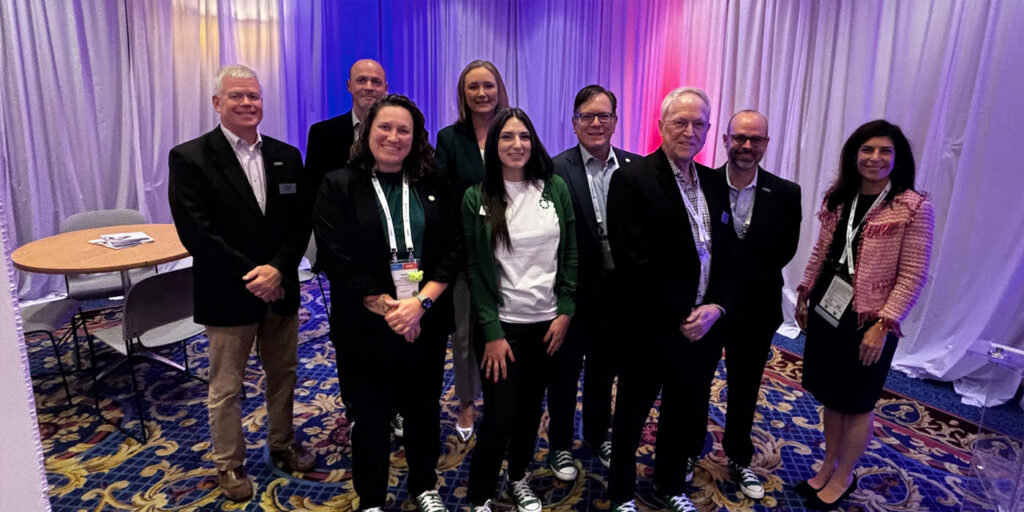
At a press conference held Wednesday morning before the AAPEX show opened, MEMA Aftermarket Suppliers’ President and incoming MEMA CEO Paul McCarthy outlined what he called his “big seven” themes shaping the future of the automotive aftermarket. McCarthy’s remarks centered on three priorities: trade advocacy, resilience among suppliers and a shared commitment to ensuring the aftermarket can repair every vehicle, whatever its technology. He balanced realism with pride, reflecting both the complexity of today’s global trade environment and the ingenuity that continues to define the aftermarket’s response.
Trade Advocacy: “If You’re Not at the Table, You’re on the Menu”
The first of McCarthy’s “big seven” focused squarely on trade. It’s a challenge that has become increasingly central to MEMA’s mission. He acknowledged the skepticism that often accompanies industry advocacy. “We’ve heard questions such as, ‘You’ve been advocating like mad for the aftermarket. Does it make any difference?’ And the answer is yes,” McCarthy said.
The association’s lobbying has yielded measurable results. Flexibility within the USMCA framework was preserved “not actually as it was written,” and reforms were secured “one tariff at a time.” The organization also convinced the Administration to guarantee refund pathways for post-importation claims. It’s a technical but meaningful win that, as McCarthy explained, “has meant a lot of money.”
Most importantly, MEMA ensured that aftermarket parts achieved parity with new vehicles in trade frameworks. That’s a crucial factor for maintaining competitiveness. “If we weren’t speaking up on behalf of the aftermarket,” McCarthy warned, “we’d be seeing hundreds of millions of dollars of additional inflationary pressures and costs on the aftermarket and on American consumers.”
The victories, he said, were not just policy outcomes, but also relationship-building milestones. MEMA has developed “senior-level channels and champions for suppliers” across multiple government departments. “When they think about automotive, they often don’t think of us,” he added. “So our voice needs to be heard.”
The Rule of Law and the Call for Fair Competition
Trade wins are only meaningful if the playing field remains level. That was McCarthy’s second point, and it came with a straightforward directive. “If you see something, say something,” he told the audience, urging suppliers to report suspected trade violations to authorities. MEMA has pushed for stronger enforcement of existing trade laws, arguing that fair competition is the backbone of supplier innovation. “Suppliers are business people. We are pro competition if there is a level playing field, if everyone is following the same rules,” McCarthy said.
The association has supported this position through member education—multiple webinars, emails, presentations—to make sure companies know how to act when they encounter violations. Enforcement, he noted, “ensures no undue costs to the rule followers.”
Celebrating the People Who Keep the Industry Moving
McCarthy also addressed the importance of relationships and people in the aftermarket. “This has been a challenging decade,” he said. “Members have told us they’ve had, I love this phrase, ‘body blows’ throughout the year.” Yet, he framed the year’s turbulence as proof of resilience. “Frankly, it’s pretty extraordinary that we push through all this. And, yet, Americans can get our vehicles repaired exactly when we want it. That is an incredible achievement.”
He credited supplier innovation for much of that success. “We need to keep our foot on the gas in the supplier innovation that drives growth in the aftermarket,” he said.
A Vision for Every Repair on Every Vehicle
McCarthy’s fourth theme underscored MEMA’s long-term vision: ensuring that the aftermarket can make “every repair on every vehicle, whatever the technology.” That vision, he explained, is driven by supplier leadership. “We’re the ones developing the technology,” he said. “We hear it from our channel partners every day that they are relying on us to see that road ahead and create solutions.”
The Repair Act remains central to that effort, as do MEMA’s investments in training and research. He cited initiatives such as the organization’s tech training hub, high-voltage training and landmark industry studies on topics ranging from artificial intelligence to ADAS calibration. Suppliers, he said, are “dedicated to not just talking about, but bringing about, this future of a thriving and competitive aftermarket and safe, affordable transportation for all Americans.”
Look for Part 2 of this article, which will include insights from Ana Meuwissen, MEMA senior vice president, MEMA government.